Secondary School
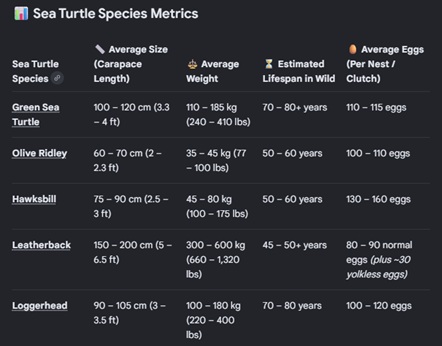
For secondary school students, sea turtles are a window into marine biology, ecology, and the real-world challenges of conservation. Here is an overview of the different type of Sea Turtles and their characteristics:
Life cycle and nesting
Female sea turtles return to the same beaches where they hatched to lay their own eggs, sometimes travelling thousands of kilometres to get there. The tracks they leave when they come ashore can reveal the species, the direction of travel, and where a nest is likely to be.
Threats they face
Habitat loss, plastic pollution, bycatch in fishing gear, artificial light, and a warming climate all put pressure on turtle populations. Because the sand temperature decides whether hatchlings are male or female, climate change can even skew the balance of future generations.
Where technology comes in
Surveying long stretches of beach by hand is slow. TortugaTracks uses AI to recognise turtle tracks in drone and field imagery, helping conservation teams cover more ground and find nests faster.
Project ideas
- Compare nesting data between two beaches or two seasons.
- Investigate how beach lighting affects hatchling survival.
- Explore how AI image recognition actually works.
This is starter copy — expand it with curriculum links and project briefs.